

Understanding Natural Hormone Rhythms During Perimenopause and Menopause
 Minal Patel - Naturopath & Food Scientist | Bhimble Wellness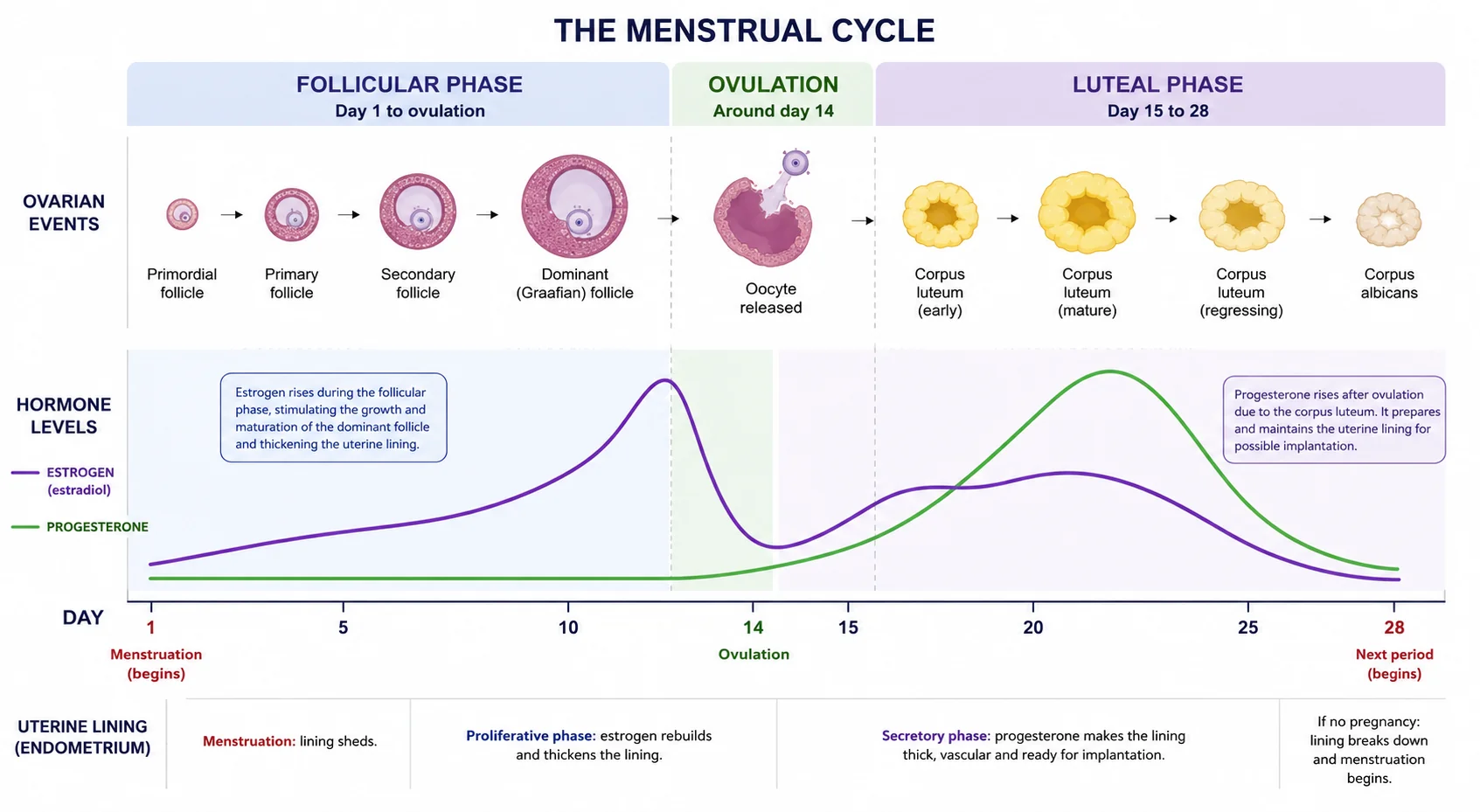
Has anyone ever explained why your natural menstrual cycle matters so much?
If your answer is “yes” or “no”, keep reading.
You’re natural menstrual cycle is not just for fertility, it’s plays a role in your long-term health and your experience of perimenopause and menopause.
Your menstrual cycle has two main phases. For most women, days 1–13 are the follicular phase. Around day 14 you ovulate. Days 15–28 are the luteal phase.
Think of your cycle as your body’s monthly hormone training ground for the years ahead. During a natural ovulatory cycle, your body produces both estrogen and progesterone, and each of these hormones plays an important role in your overall wellbeing.
Estrogen supports brain function, mood, skin health, bone strength and cardiovascular health.
Progesterone is often described as your calming, grounding hormone. It supports the nervous system, helps with sleep, balances the effects of oestrogen and can help you feel more steady, resilient and relaxed.
Progesterone is Only Produced After Ovulation.
If you’re not ovulating regularly, that means you’re not receiving those regular progesterone boosts. This is important as you move into perimenopause as progesterone is usually the first hormone to start declining, often years before menopause itself. After menopause, progesterone levels become very low.
This is one reason why years of healthy ovulation can be so valuable. Your body has had the benefit of regular exposure to both estrogen and progesterone throughout your reproductive years.
Hormonal Contraception May Suppress Ovulation
Many women are surprised to learn that hormonal contraceptives can change their natural hormone rhythm. Some contraceptive methods work by suppressing ovulation, which means your body is no longer producing its own progesterone.
You may still experience a monthly bleed while on some contraceptives - this isn’t a menstrual period, it’s a withdrawal bleed caused by the hormones.
If you have a Mirena and thinking “I get my progesterone from my Mirena“. You’re not. The Mirena releases a progestin called levonorgestrel, progestin is not the same as progesterone.
If you’ve been told the Mirena contains “progesterone,” it doesn’t, it contains a synthetic hormone that acts in some similar ways but has a different structure and different effects in the body.
Metabolising And Clearing Estrogen
While our natural hormone rhythms are important, another crucial piece of the puzzle is how well your body metabolises and clears oestrogen through the liver, gut and bowels.
Good estrogen clearance is often supported by regular bowel movements, a healthy gut microbiome, balanced blood sugar levels and good nutrition.
When estrogen is metabolised and cleared efficiently, many women experience less PMS, fewer heavy periods and fewer hormone-related symptoms. This becomes even more important during perimenopause, when estrogen levels can fluctuate dramatically from one month to the next.
If your body already has strong foundations of natural cycles and processing and clearing estrogen well, those hormonal ups and downs may feel more manageable.
Your menstrual cycle is about so much more than fertility. It’s a reflection of your hormonal health, and it plays an important role in supporting your brain, nervous system, bones, metabolism and overall wellbeing.
Understanding and supporting your natural hormone rhythms today can help set you up for a smoother transition through perimenopause and menopause tomorrow.
Are You Ready for Support?
You don’t have to figure it all out on your own.
If you’re struggling with symptoms of perimenopause or menopause and you’d like to learn more about supporting your hormones naturally, I’d love to help you.
Book a complimentary Hormonal Wellness Discovery Call to find our more
With love & understanding,
Minal xx